
Custom Search
|
|
The Scotti
Classical writers used the term Scotti to describe Gaelic speakers from Ireland and western Scotland.
The foundation myths of Scotland state that the Scottish Gaels originated from the Dal Riata tribe in Antrim, north-east Ireland. Around AD 500, or so the story goes, Fergus Mor mac Eirc supposedly established a new Dal Riata in Argyll because of dynastic competition at home (Foster, 1996: 13). According to this view, they displaced a previous British or Pictish community from Argyll - a process which eventually ended with the takeover of the entire Pictish kingdom in the 9th century to create the united kingdom of Alba that became Scotland.
Leslie Alcock (1970) examined the archaeological evidence in detail and concluded that there was very little to support the idea that there was a 4th/5th century invasion from Ireland. Similarly, Foster finds no archaeological evidence for this migration. However, she concludes that distribution of artefacts and similarities in monument construction show close links between Antrim and Kintyre from the Neolithic onwards. The evidence also supports an extensive Gaelic-speaking presence during this period along Britain's western coast, including Cornwall, Devon, Dyfed, Anglesey and south-west Scotland.
Very litle archaeology had taken place in Argyll and Antrim prior to Alcock's review, but this was no longer the case by the end of the 20th century. Nevertheless, Campbell (2001) could summarise the current state of knowledge in the following words:
'There is ... no evidence of a change in the normal settlement type at any point in the 1st millennium AD and no basis for suggesting any significant population movement between Antrim and Argyll in the 1st millennium AD. At best, the evidence shows a shared cultural region from the Iron Age, with some subsequent divergence in the later 1st millennium AD. Any cultural influences could be argued as likely to have been going from Scotland to Ireland rather than vice versa.'
Campbell (2001) goes on to examine evidence for an 'elite takeover', similar to the Norman invasion of England. Using comparative dating of brooches as an example, again he finds no support for the notion of dominant arrivals from Ireland. If anything, the influence is (yet again) in the opposite direction.
A gaelic 'spin'?
Wormald (1996: 142-3), referring to an earlier article of his, states:
'I have recently argued that Bede and Alfred provided the ideological charter of a new English kingdom by adapting the Israelite model to Anglo-Saxon experience of the Britons and the Vikings (1994). And, yes, I now venture the same proposal for the Scots, their compeers in ninth century statecraft.'Campbell (2001) unpicks the written evidence and arrives at a similar conclusion. The Irish Annals of Tighernach provides the following entry for around 500 AD (cited in Campbell, 2001):
`Feargus mor mac earca cum gente dalriada partem britania tenuit et ibi mortus est' - `Fergus Mor, mac Erc, with the nation of Dal Riada, took (or held) part of Britain, and died there'.But the names Dalriada, Feargus and Earca are Middle Irish. If they had been written at the time, they would have been in the Old Irish forms: Dalriata, Fergus and Erca. This entry could not have been made before the 10th century. In fact, the Annals appear to contain a number of insertions from the 10th century. Campbell cites a similar modification in the Senchus Fer nAlban (History of the Men of Scotland) - thought to have been originally composed in the 7th century and amended in the 10th century. This states `Erc, moreover had twelve sons .i. six of them took possession of Alba' and goes on to list the Dalriadan kings from Fergus Mor to the middle of the 7th century. But there is no reference to a migration so Campbell concludes that it refers to a Royal takeover, not an invasion. Tellingly, the use of the word Alba betrays its 10th century origins as it was not a term used before then for Scotland.
Bannerman (1974) compared the explanation for the Irish in Britain provided by Bede. This was quite different, ascribing their presence to an invader from Ireland called Reuda - hence Dalreuda. Bannerman suggested that this older tradition had been replaced by the Fergus Mor version in the 10th century for 'political reasons'. Campbell agrees: 'These sources, and some other later material, are clearly origin legends of a type common to most peoples of the period, constructed to show the descent of a ruling dynasty from a powerful, mythical or religious figure. Such genealogies, could be, and often were, manipulated to suit the political climate of the times ...'
The Gaels were involved in the final absorption of the last British state in the North. Read Kingdom of Strathclyde’s final chapter by Stephen Driscoll at the British Archaeology site.
References
Alcock, L. 1970. 'Was there an Irish-Sea Culture-Province in The Dark Ages?', in D. Moore (ed.), The Irish Sea Province in archaeology and history: pp.55-65. Cambrian Archaeological Association.
Bannerman, I. (1974) Studies in the history of Dalriada, Scottish Academic Press.
Campbell, E. (2001), 'Were the Scots Irish?' Antiquity, June, Issue 288, pp. 285-292.
Foster, S.M. (2004), Picts, Gaels and Scots, Historic Scotland/ Batsford.
Wormald, P. (1996), 'Emergence of the Regnum Scottorum: a Carolingian hegemony?' in Crawford, B.E. (ed) (1996), Scotland in Dark Age Britain, University of St Andrews, St. John's House Papers No.6, Scottish Cultural Press, Aberdeen.
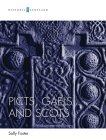
by Sally M. Foster. A fully updated and expanded edition of a classic text on early Scottish history. From the 5th to the 10th century, Scotland was home to a variety of diverse peoples and cultures, all competing for land and supremacy. At the heart of the mystery of how Scotland became a single unified country lies the extraordinary influence of the Picts and their neighbours, the Gaels, originally immigrants from Ireland. Sally Foster uses the latest archaeological discoveries and interpretations as well as developments in historical, art-historical and place-name studies to explain how the Picts and Gaels became Scots and forged a nation. Available from:
Amazon.co.uk - UK Pounds
Amazon.com - US Dollars
Amazon.ca - Canadian dollars
Amazon.de - Euros
Amazon.fr - Euros
Copyright © 2009-2025 Alan Price and IslandGuide.co.uk contributors. All rights reserved. Island Guide makes minimal use of cookies, including some placed to facilitate features such as Google Search. By continuing to use the site you are agreeing to the use of cookies. Learn more here