Custom Search
|
|
Dark Age Britain - Evidence
Written sources and archaeological evidence
'Some historians have treated the destruction of the Romano- British world and of the native population as virtually total. Others have treated the Anglo-Saxon intruders as imposing little more than the superficial veneer of a new language and a conquering elite on a British population that remained basically in place, however economically depressed and culturally deprived.' Myres (1986: 2)'
Myres questions why such different interpretations should occur. An element of difficulty arises from the written sources. There seems to be a general assumption that our knowledge of Roman Britain is good and that difficulties begin because the post-Roman period does not provide us with such detail. In fact, Roman written material is sparse, particularly when it comes to the non-mediterranean regions. Moreover, few Roman writers ever visited Britain. The truth is that the last years of Roman Britain are virtually as 'dark' as the centuries thereafter!
However, as Myres points out, there is the evidence of Roman archaeology, which appears much richer than later remains. This is because:
* Roman villas, towns, forts and other structures followed comparatively standardised forms. They are easily recognisable for what we believe them to be.
* Provincial Roman society was dependent on mass-produced goods such as pottery, metalware and glass which have the dual qualities of being durable and classifiable.
* The Roman economy required coinage, which was again mass-produced and provides a dating system for the objects and sites it is associated with.
Non-standard, locally devised buildings, locally-produced wares made of less durable materials such as wood and leather, and the absence of coins make Dark Age archaeology far more problematic. It may not be a matter of the evidence not being there, but our inability to recognise it for what it is - and, just as importantly, when it was deposited. As we shall see, the importance attached to 'Anglo-Saxon' remains, and therefore Anglo-Saxon culture derives from the rather obvious nature of pagan grave goods. Similarly, the Anglo-Saxon viewpoint is further reinforced by literature written from the 7th century onwards by people with an Anglo-Saxon agenda to serve. Bede is a prime example.
Similarly, Martin Henig casts doubt on the interpretation of 'dark age' evidence such as the assumptions that Anglo-Saxons were buried with grave goods and Britons were not (British Archaeology, December 2002). "It is not satisfactory to describe, for example, the warrior buried at Lowbury Hill in Oxfordshire as an Anglo-Saxon - as many have - simply because he possessed a shield and a spear. His iron spear was enamelled, most unusually, in a Celtic style, and he was buried with a hanging bowl also in Celtic style. It looks rather as if he wanted to make it clear that he was British."
Wormald (1996: 131) contends that there were two significant events which developed from the dark ages: the 'Making of England' and the foundation of the Regnum Scottorum. In the first case, he remarks:
'What do historians do when confronted with what amounts to a wall of silence (or, at best, a burble of distant and indistinct voices)? One thing they can do is what Anglo-Saxon historians did until lately with their equivalent problem, which is not the emergence of 'Engla Lond' but the transformation of lowland Britain between the early fifth and sixth centuries.'
He argues that the historians have taken every single piece of available evidence and 'crammed' it 'into its place in an interpretative vessel so crafted as to accommodate them all'. However, in doing so, they attribute significance to the (written) material which it did not have for its authors. Wormald goes on to state that:
'...we now tend to see the pre-conversion annals of the Anglo-Saxon Chronicle not as a record of the conquest of Southern England in the sixth century, but as some sort of explanation and legitimation of the way it was ruled in the ninth.'
For an account of archaeological findings from burial grounds read: Finding Britons in Anglo-Saxon graves by Heinrich Harke in British Archaeology which indicates evidence for considerable inter-marriage rather than extermination of the Britons.
Reference:
Wormald, P. (1996), 'Emergence of the Regnum Scottorum: a Carolingian hegemony?' in Crawford, B.E. (ed) (1996), Scotland in Dark Age Britain, University of St Andrews, St. John's House Papers No.6, Scottish Cultural Press, Aberdeen.
By Dr Miles Russell
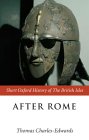
The chapters in this volume, each written by a leading scholar of the period, analyse in turn the different nationalities and kingdoms that existed in the British Isles from the end of the Roman empire to the coming of the Vikings, the process of conversion to Christianity, the development of art and of a written culture, and the interaction between this written culture and the societies of the day. Available from:Amazon.co.uk - British pounds
Amazon.com - US dollars
Amazon.ca - Canadian dollars
Amazon.de - Euros
Amazon.fr - Euros
Copyright © 2009-2025 Alan Price and IslandGuide.co.uk contributors. All rights reserved. Island Guide makes minimal use of cookies, including some placed to facilitate features such as Google Search. By continuing to use the site you are agreeing to the use of cookies. Learn more here