
Custom Search
|
|
On The Ruin of Britain (De Excidio Britanniae) by Gildas
18. The Romans, therefore, left the country, giving notice that they could no longer be harassed by such laborious expeditions, nor suffer the Roman standards, with so large and brave an army, to be worn out by sea and land by fighting against these unwarlike, plundering vagabonds; but that the islanders, inuring themselves to warlike weapons, and bravely fighting, should valiantly protect their country, their property, wives and children, and, what is dearer than these, their liberty and lives; that they should not suffer their hands to be tied behind their backs by a nation which, unless they were enervated by idleness and sloth, was not more powerful than themselves, but that they should arm those hands with buckler, sword, and spear, ready for the field of battle; and, because they thought this also of advantage to the people they were about to leave, they, with the help of the miserable natives, built a wall different from the former, by public and private contributions, and of the same structure as walls generally, extending in a straight line from sea to sea, between some cities, which, from fear of their enemies, had there by chance been built. They then give energetic counsel to the timorous natives, and leave them patterns by which to manufacture arms. Moreover, on the south coast where their vessels lay, as there was some apprehension lest the barbarians might land, they erected towers at stated intervals, commanding a prospect of the sea; and then left the island never to return.
19. No sooner were they gone, than the Picts and Scots, like worms which in the heat of the mid-day come forth from their holes, hastily land again from their canoes, in which they had been carried beyond the Cichican* valley, differing one from another in manners, but inspired with the same avidity for blood, and all more eager to shroud their villainous faces in bushy hair than to cover with decent clothing those parts of their body which required it. Moreover, having heard of the departure of our friends, and their resolution never to return, they seized with greater boldness than before on all the country towards the extreme north as far as the wall. To oppose them there was placed on the heights a garrison equally slow to fight and ill adapted to run away, a useless and panic-struck company, who slumbered away days and nights on their unprofitable watch. Meanwhile the hooked weapons of their enemies were not idle, and our wretched countrymen were dragged from the wall and dashed against the ground. Such premature death, however, painful as it was, saved them from seeing the miserable sufferings of their brothers and children. But why should I say more? They left their cities, abandoned the protection of the wall, and dispersed themselves in flight more desperately than before. The enemy, on the other hand, pursued them with more unrelenting cruelty than before, and butchered our countrymen like sheep, so that their habitations were like those of savage beasts; for they turned their arms upon each other, and for the sake of a little sustenance, imbrued their hands in the blood of their fellow countrymen. Thus foreign calamities were augmented by domestic feuds; so that the whole country was entirely destitute of provisions, save such as could be procured in the chase.
* The meaning of this expression is not known. O'Connor thinks it is the Irish Sea.
By Dr Miles Russell
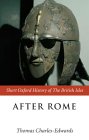
The chapters in this volume, each written by a leading scholar of the period, analyse in turn the different nationalities and kingdoms that existed in the British Isles from the end of the Roman empire to the coming of the Vikings, the process of conversion to Christianity, the development of art and of a written culture, and the interaction between this written culture and the societies of the day. Available from:Amazon.co.uk - British pounds
Amazon.com - US dollars
Amazon.ca - Canadian dollars
Amazon.de - Euros
Amazon.fr - Euros
Copyright © 2009-2023 Alan Price and IslandGuide.co.uk contributors. All rights reserved. Island Guide makes minimal use of cookies, including some placed to facilitate features such as Google Search. By continuing to use the site you are agreeing to the use of cookies. Learn more here