
Custom Search
|
|
On The Ruin of Britain (De Excidio Britanniae) by Gildas
12. In less than ten years, therefore, of the above-named persecution, and when these bloody decrees began to fail in consequence of the death of their authors, all Christ's young disciples, after so long and wintry a night, begin to behold the genial light of heaven. They rebuild the churches, which had been levelled to the ground; they found, erect, and finish churches to the holy martyrs, and everywhere show their ensigns as token of their victory; festivals are celebrated and sacraments received with clean hearts and lips, and all the church's sons rejoice as it were in the fostering bosom of a mother. For this holy union remained between Christ their head and the members of his church, until the Arian treason, fatal as a serpent, and vomiting its poison from beyond the sea, caused deadly dissension between brothers inhabiting the same house, and thus, as if a road were made across the sea, like wild beasts of all descriptions, and darting the poison of every heresy from their jaws, they inflicted dreadful wounds upon their country, which is ever desirous to hear something new, and remains constant long to nothing.
13. At length also, new races of tyrants sprang up, in terrific numbers, and the island, still bearing its Roman name, but casting off her institutes and laws, sent forth among the Gauls that bitter scion of her own planting Maximus, with a great number of followers, and the ensigns of royalty, which he bore without decency and without lawful right, but in a tyrannical manner, and amid the disturbances of the seditious soldiery. He, by cunning arts rather than by valour, attaching to his rule, by perjury and falsehood, all the neighbouring towns and provinces, against the Roman state, extended one of his wings to Spain, the other to Italy, fixed the seat of his unholy government at Treves, and so furiously pushed his rebellion against his lawful emperors that he drove one of them out of Rome, and caused the other to terminate his most holy life. Trusting to these successful attempts, he not long after lost his accursed head before the walls of Aquileia, whereas he had before cut off the crowned heads of almost all the world.
14. After this, Britain is left deprived of all her soldiery and armed bands, of her cruel governors, and of the flower of her youth, who went with Maximus, but never again returned; and utterly ignorant as she was of the art of war, groaned in amazement for many years under the cruelty of two foreign nations--the Scots from the north-west, and the Picts from the north.
By Dr Miles Russell
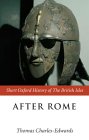
The chapters in this volume, each written by a leading scholar of the period, analyse in turn the different nationalities and kingdoms that existed in the British Isles from the end of the Roman empire to the coming of the Vikings, the process of conversion to Christianity, the development of art and of a written culture, and the interaction between this written culture and the societies of the day. Available from:Amazon.co.uk - British pounds
Amazon.com - US dollars
Amazon.ca - Canadian dollars
Amazon.de - Euros
Amazon.fr - Euros
Copyright © 2009-2023 Alan Price and IslandGuide.co.uk contributors. All rights reserved. Island Guide makes minimal use of cookies, including some placed to facilitate features such as Google Search. By continuing to use the site you are agreeing to the use of cookies. Learn more here